

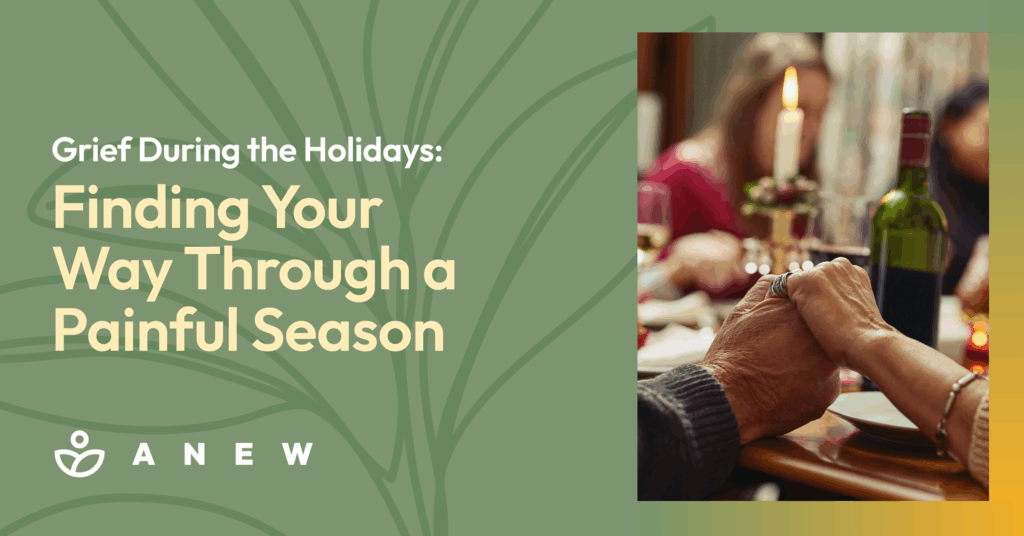
The holiday season is supposed to be the most wonderful time of the year. At least, that’s the message on every commercial, card, and social feed. But for many people, especially those navigating grief, loss, or fractured relationships, the holidays don’t feel merry and bright. They feel heavy. Watch our latest podcast episode where our host Mauricio Laguan discusses the hardships that the holiday season can have with our very own Kate Johnson, LMFT.
At Anew Therapy, we know how complicated this season can be. Whether you’re mourning the absence of a loved one, estranged from family, or simply feeling the weight of unmet expectations, this time of year can stir up deep emotional pain. And if that’s where you find yourself right now, you are not alone.
This guide isn’t about putting a silver lining on real pain. It’s about finding honest, compassionate ways to move through the season at your own pace, while making space for healing, even in the smallest moments.
Why the Holidays Can Hurt More Than Other Times
Heightened Expectations
There’s a collective script around the holidays that tells us we should feel joyful, grateful, connected. But for anyone grieving, that script can feel like a cruel mismatch. The expectation to be cheerful only magnifies the absence of what’s been lost.
Reminders of What’s Missing
For those who have lost someone, holiday traditions can become painful reminders. An empty chair at the dinner table. The stocking that no longer gets filled. A favorite dish no one else can cook quite the same way. These markers of absence can catch you off guard, even if you thought you were prepared.
Disconnection and Loneliness
Even in a room full of people, grief can feel incredibly isolating. And if you’re physically alone, whether by choice or circumstance, that disconnection can deepen during a time when everyone else seems surrounded by love and laughter.

How to Cope with Grief During the Holidays
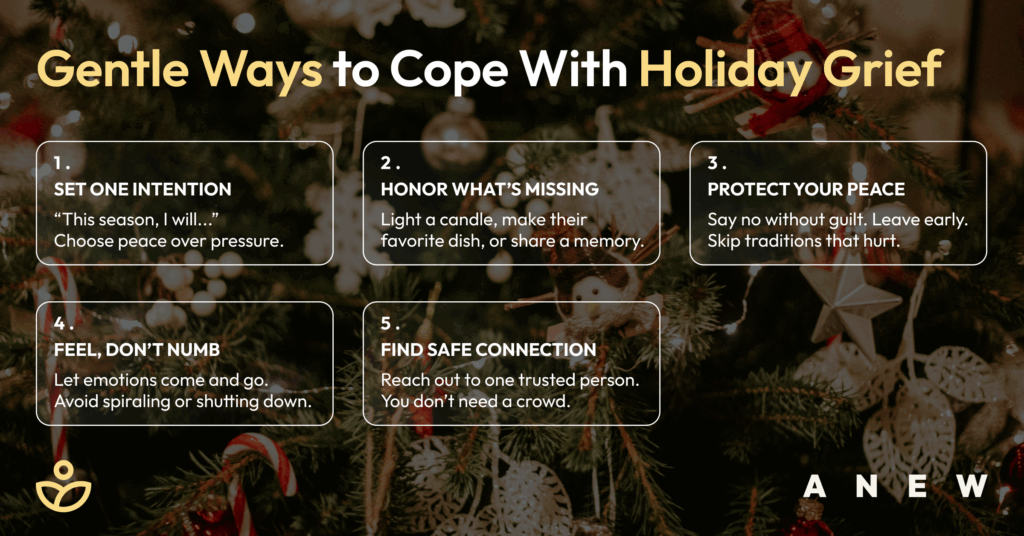
1. Set Realistic Expectations
You don’t have to be joyful. You don’t have to do all the things. Give yourself permission to do less, say no, or change traditions entirely. Protect your peace, even if it means disappointing others.
Try this: Set one intention for how you want to move through the season. That could be “maintain calm,” “honor my grief,” or “find small moments of joy.”
2. Honor Who or What You’ve Lost
Create a ritual or tradition that acknowledges your grief. Light a candle. Make their favorite recipe. Share a story. Write them a letter. Don’t be afraid to speak their name – remembering can be painful, but forgetting is worse.
3. Boundaries Are a Form of Self-Care
If gatherings feel too emotionally charged or you’re dreading specific interactions, you’re allowed to set limits. Decide ahead of time what you will and won’t tolerate. Consider an “exit strategy” for events that might be too much. You don’t have to explain your boundaries to everyone, just enforce them.
4. Let Yourself Feel, Without Getting Stuck
Sadness, anger, guilt, and longing are all normal parts of grief. Let them come, acknowledge them, and let them go when you can. Feel your feelings within reason: enough to move through them, not so much that you drown in them.
Avoid numbing behaviors that only delay the grief. Scrolling, shopping, drinking, or overworking might distract you temporarily, but healing requires presence.
5. Seek Connection Where It Feels Safe
If your family isn’t safe or supportive, build your own circle. Reach out to a friend. Join a support group. Say yes to the quiet coffee date, even if you’re not sure you’ll have the energy to talk. You don’t need a crowd. You just need one safe person.
How Grief Affects the Body
Grief doesn’t only live in the heart. It often shows up in the body in quiet but disruptive ways. You might feel:
- Fatigue that doesn’t go away with sleep
- Headaches or muscle tension
- Digestive issues or changes in appetite
- Tightness in your chest or shallow breathing
These symptoms are your nervous system processing emotional pain. They’re not signs of weakness, they’re reminders that grief is a full-body experience. Be gentle with yourself. Drink water. Move your body, even a little. Rest when you can. Your body deserves the same compassion as your heart.
Clinical and Therapeutic Support Options
When grief becomes overwhelming or persistent, therapy can be an anchor. At Anew Therapy, we often say to our clients: “You don’t have to fix everything today. Let’s just start by making the next week more bearable.” Our approach combines warmth with evidence-based care to help you find your footing again.
We offer:
- Grief counseling and trauma-informed therapy
- Ketamine-assisted psychotherapy for complicated grief or depression
- Spravato (esketamine) for treatment-resistant symptoms
- TMS (Transcranial Magnetic Stimulation) for those seeking non-medication-based relief
These therapies aren’t about erasing pain. They’re about creating enough emotional space for you to breathe again, so you can carry your loss with less suffering. If you’re unsure where to start, just begin by talking with us.
A One-Week Emotional Survival Plan
If you’re feeling overwhelmed, here’s a simple 7-day guide to help you stay grounded:
Day 1: Write a letter to the person or thing you’re grieving. Say everything.
Day 2: Go outside for 10 minutes. Feel the air. Notice one small, beautiful thing.
Day 3: Light a candle and sit in quiet for five minutes. Let whatever emotions surface, come.
Day 4: Text a friend just to say you’re thinking of them. You don’t have to explain.
Day 5: Write down three things you did right today, even if it’s just brushing your teeth.
Day 6: Eat a nourishing meal and thank your body for getting you through.
Day 7: Reflect on the week. What helped? What hurt? What do you want more of next week?
You’re Not Alone
Grief doesn’t care what season it is. When the world feels bright and loud and full of expectation, your pain can feel even heavier. If the holidays are hard this year, you’re not doing anything wrong. You’re just human, and hurting.
At Anew Therapy Utah, you don’t need to have the right words. You don’t need to wrap your pain in a neat story. You don’t even need to feel ready. We meet you exactly where you are, with compassion, clinical expertise, and space to move through this season at your own pace. No pressure. Just support. Schedule a free consultation online today, or call us or text us at (801) 980-2690

Crisis Support Resources
- Utah Warm Line: 1-833-SPEAKUT (1-833-773-2588)
- 988 Suicide & Crisis Lifeline: Call or text 988
