


Perimenopause brings a mix of physical symptoms and emotional upheaval, often leaving women exhausted, anxious, and unheard. While hot flashes and irregular cycles are expected, what many don’t anticipate are the emotional lows, brain fog, and mood swings that can hit just as hard, if not harder.
At Anew Therapy, we’re seeing more women arrive with one big question: Is there something else out there besides hormones and SSRIs? The answer is yes.
Why Mental Health Deserves Equal Attention in Perimenopause
Perimenopause typically begins in your mid-40s and lasts 2-8 years, though it can start as early as your late 30s. During this time, your ovaries gradually produce less estrogen and other hormones, leading to irregular periods and a cascade of symptoms that can significantly impact your daily life.
The most common symptoms include hot flashes, night sweats, mood changes, brain fog, sleep disturbances, and vaginal dryness. But perimenopause affects everyone differently. Some women sail through with minimal disruption, while others experience symptoms severe enough to interfere with work, relationships, and overall quality of life.
What’s particularly frustrating is that this transition remains substantially undertreated. Research shows that only 6.8% of medical trainees felt prepared to manage menopausal symptoms, creating a knowledge gap that leaves many women without the support they need.
There are effective treatments for menopause and perimenopause symptoms these days. Whether you’re experiencing physical symptoms like hot flashes or struggling with mood changes and anxiety, there are evidence-based options that can help. And today, that includes a new class of brain-based therapies like ketamine, Spravato, and TMS.

The Science Behind Ketamine, Spravato, and TMS
These treatments work by targeting the brain’s neuroplasticity, which is the technical term for the brain’s ability to form new neural pathways. During perimenopause, hormone fluctuations can disrupt neurotransmitters like serotonin and glutamate. That disruption can make traditional antidepressants less effective, particularly when anxiety, depression, or trauma resurface or intensify.
Ketamine Therapy
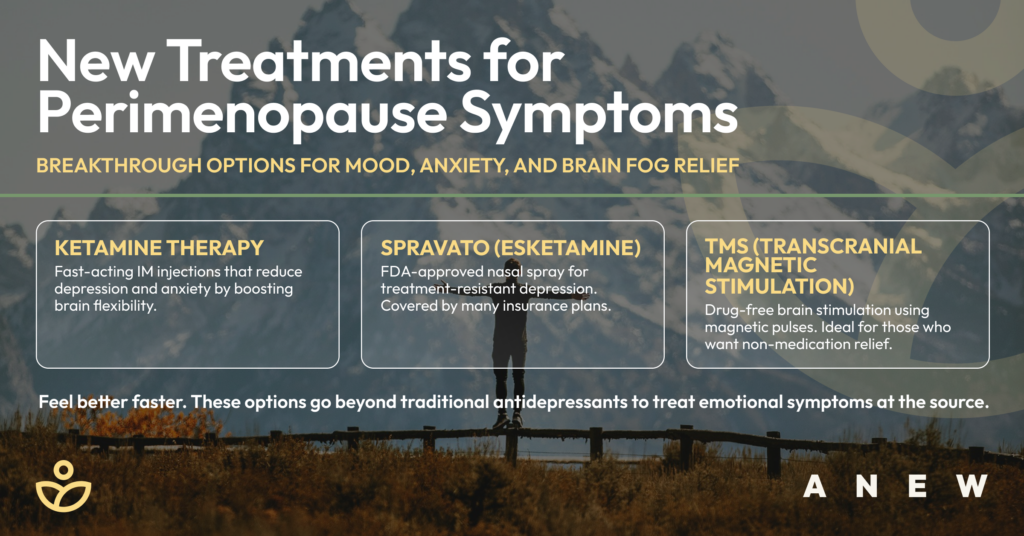
Ketamine, originally an anesthetic, has been repurposed as a fast-acting intervention for mood disorders. Administered via intramuscular (IM) injection in a clinical setting, low-dose ketamine can provide symptom relief within hours to days. It temporarily boosts glutamate signaling and stimulates BDNF (brain-derived neurotrophic factor), helping the brain become more “teachable.” This process allows talk therapy to make a deeper impact during the treatment window
Many women report feeling more emotionally stable, clear-headed, and energized after just a few sessions. Ketamine is especially effective for treatment-resistant depression and can help reduce anxiety, irritability, and hopelessness tied to perimenopause.
Spravato (Esketamine Nasal Spray)
Spravato is a more refined, FDA-approved version of ketamine delivered as a nasal spray under supervision. It is typically prescribed alongside a traditional antidepressant and follows a structured schedule: twice weekly for the first month, then tapering to weekly or biweekly maintenance.
Because Spravato is FDA-approved for treatment-resistant depression, it’s often covered by insurance. It delivers similar neuroplastic benefits as IM ketamine, and patients often feel noticeable mood shifts within the first 2-4 weeks.
Transcranial Magnetic Stimulation (TMS)
TMS is a non-invasive, drug-free treatment that uses gentle magnetic pulses to stimulate underactive mood centers in the brain. It’s FDA-approved for major depressive disorder and OCD, and has shown promising results in treating perimenopausal depression.
TMS sessions last about 20-40 minutes, five days a week for several weeks. There’s no sedation, no recovery time, and no systemic side effects. It’s especially helpful for women who can’t tolerate medications or want a long-term solution without daily pills.
When to Consider Advanced Therapies for Perimenopause
You might benefit from ketamine, Spravato, or TMS if:
- You’ve tried hormone therapy or antidepressants with limited success
- Anxiety or depression is affecting your relationships or work
- You’re experiencing emotional numbness, brain fog, or intrusive thoughts
- You want fast-acting relief that doesn’t rely on daily medication
- You’re looking for non-hormonal options due to personal or medical reasons
Complementary Lifestyle Changes Still Matter
Innovative therapies are most powerful when paired with foundational health habits:
- Nutrition: Focus on heart-healthy, anti-inflammatory foods.
- Movement: Aim for daily activity to regulate mood and weight.
- Sleep: Practice consistent sleep hygiene to restore energy.
- Stress: Try mindfulness, yoga, or breathing exercises to stay centered.
- Vaginal Health: Use lubricants or local estrogen for comfort and intimacy.
Comprehensive Care: Integrating Mental and Physical Health
Navigating perimenopause can feel like a rollercoaster, but a holistic approach combining medical, lifestyle, and mental health strategies can provide significant relief.
Supportive care starts with tracking your symptoms and working with a provider to customize your treatment plan. Hormone therapy (HRT) remains the most effective option for hot flashes, night sweats, and vaginal dryness. For those who can’t use hormones, non-hormonal options include SSRIs, gabapentin, and fezolinetant.
When emotional symptoms dominate, your sleep is fractured, and your joy feels out of reach, brain-based treatments can be the key to getting your life back. That’s where holistic mental health clinics like Anew Therapy come in.
The Anew Therapy Utah Difference
At Anew Therapy Utah, we focus on supporting women navigating the emotional toll of hormonal shifts, trauma, and life transitions. Our female-led clinical team provides ketamine therapy, Spravato, and TMS in a calm, compassionate environment. Treatment plans are always grounded in your lived experience, not a one-size-fits-all protocol.
If you’ve tried medication, therapy, or hormone treatment and still don’t feel like yourself, you’re not out of options. You deserve care that meets you where you are, and helps you move forward.
Call or text us at (801) 980-2690, or schedule a free consultation online.

FAQs
How fast does ketamine work for perimenopausal depression?
Many patients notice mood improvements within 24–72 hours of their first ketamine session. However, most benefit from a short series of treatments to stabilize results and integrate therapeutic changes.
Can I use Spravato if I’ve never taken antidepressants?
No. Spravato is FDA-approved only for treatment-resistant depression, which typically means you’ve tried and not responded to at least two antidepressants. Your provider can help assess if you qualify.
Is TMS safe during perimenopause or early menopause?
Yes. TMS is non-invasive and does not affect your hormones. It’s especially helpful for women who want to avoid medications or have had side effects from antidepressants during hormonal transitions.
Will insurance cover these treatments for perimenopausal symptoms?
Coverage depends on diagnosis. If you have clinical depression or anxiety exacerbated by perimenopause, insurance may cover Spravato or TMS. Ketamine is often not covered but may be HSA/FSA-eligible.
How do I choose between hormone therapy and brain-based treatments?
Hormone therapy targets the root hormonal imbalance; ketamine, Spravato, and TMS target the brain’s response to those changes. Many patients benefit from combining both approaches with provider guidance.
What are the side effects of ketamine therapy?
Short-term side effects may include dizziness, nausea, or mild dissociation. These typically wear off within an hour, and treatments are always monitored by medical staff in a controlled setting.
Can these treatments help with brain fog or cognitive issues?
Yes. Many women report improvements in focus, memory, and mental clarity after ketamine or TMS, particularly when cognitive issues stem from depression or chronic stress during perimenopause.
Where can I find advanced perimenopause mental health care in Utah?
Anew Therapy Utah, located in Sandy, provides ketamine therapy, Spravato, and TMS tailored specifically to women navigating mood and cognitive changes during perimenopause.
Schedule your free intake appointment today.
