


Ketamine therapy has emerged as one of the most promising breakthroughs in mental health treatment, but it’s also one of the most misunderstood. Between sensational headlines and lingering stigma, the true science behind how ketamine heals often gets lost.
At Anew Therapy, we believe the conversation deserves clarity. So let’s break it down: what actually happens in the brain during ketamine therapy? Why does it work faster than traditional antidepressants? And most importantly, how do we ensure it’s safe, meaningful, and part of a holistic healing process?
Watch the latest The Feels Club podcast where we sit down with Tia Johnson, FNP-C, PMHNP-C, where we discuss the science behind Ketamine Therapy.
What Happens in the Brain During Ketamine Therapy?
Unlike traditional antidepressants, which target serotonin or dopamine levels over the course of weeks, ketamine works directly on the brain’s glutamate system. This is a key neurotransmitter involved in learning, memory, and mood regulation.
When administered in low, sub-anesthetic doses, ketamine temporarily boosts glutamate signaling and stimulates the release of brain-derived neurotrophic factor (BDNF). This is where the real magic begins.
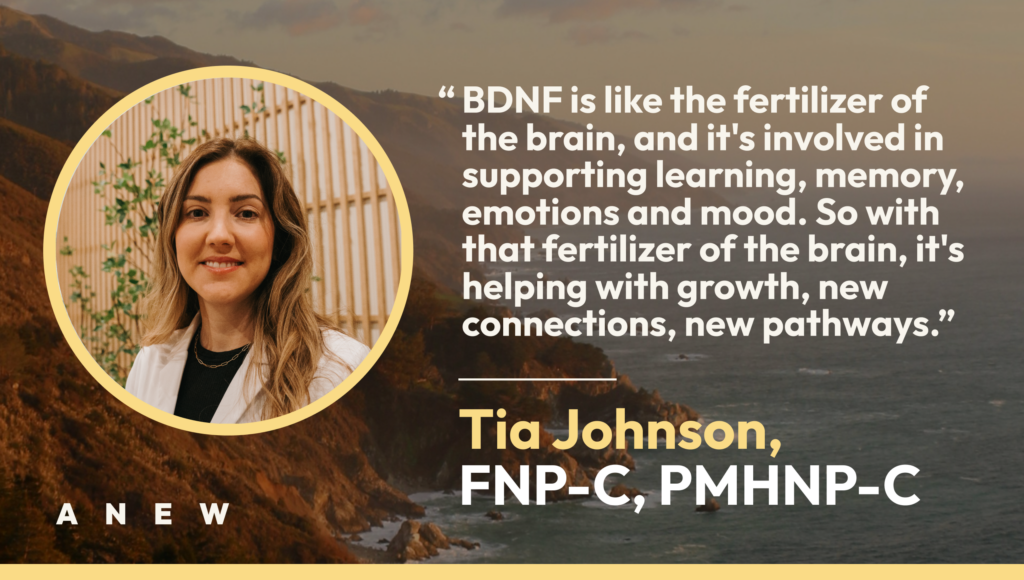
Increased BDNF creates a window of neuroplasticity. This allows a heightened state of brain flexibility that rewires old neurological patterns. This explains why ketamine often brings rapid relief from depression, PTSD, and anxiety: it doesn’t just mask symptoms, it helps the brain relearn healthier ways of thinking and feeling.
Why Ketamine Works Faster Than Traditional Antidepressants
Traditional antidepressants can take 4-8 weeks to begin working. Ketamine, by contrast, can reduce depressive symptoms within hours to days. If you’ve ever struggled with depression, you know how much that speed can matter, especially for those in crisis or for anyone who’s spent years cycling through treatments that never fully worked.
Because ketamine acts directly on glutamate and enhances neuroplasticity, it bypasses the slower, indirect pathways of SSRIs and SNRIs. It doesn’t rely on gradually shifting mood chemicals over time; it opens a door to immediate change.
Neuroplasticity: The Foundation for Healing
Neuroplasticity is your brain’s ability to adapt, change, and form new neural connections. During ketamine therapy, this state of openness allows you to:
- Rewire negative thought loops
- Process trauma with more emotional distance
- Engage more fully in talk therapy
- Form new, healthier habits faster
Think of ketamine as the primer, and therapy as the brush. You need both for the full picture to come into view.
How Ketamine Integrates with Talk Therapy and Holistic Care
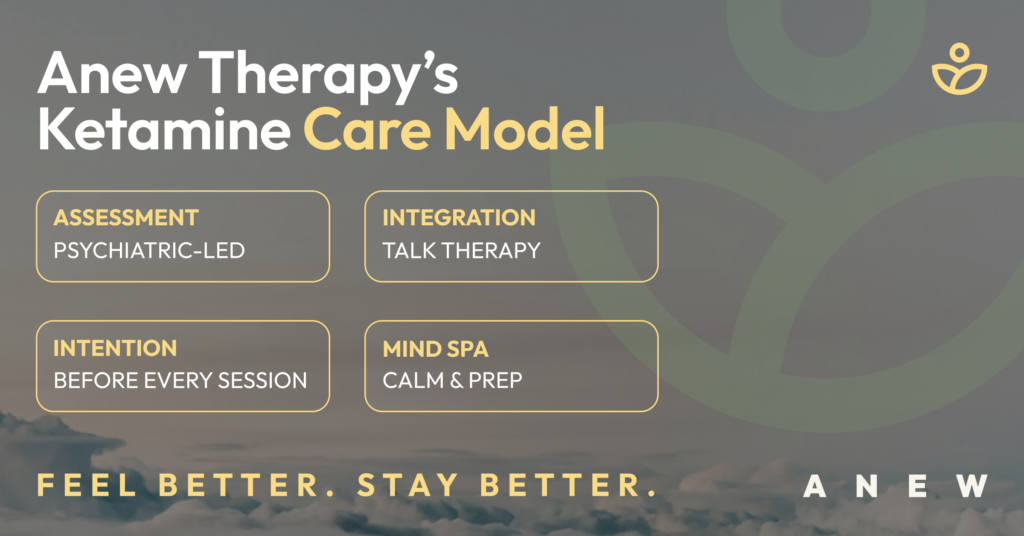
At Anew Therapy, we don’t believe in quick fixes or isolated treatments. That’s why every ketamine protocol includes:
- Clinical assessment by psychiatric professionals
- Integration support with licensed therapists
- Intention setting and emotional prep before each session
- Mind Spa access for mindfulness, grounding, and reflection
Ketamine creates the neurobiological conditions for healing. Therapy helps you turn those conditions into lasting change. This mind-body approach ensures patients don’t just feel better, they stay better.
What to Expect from Your First Ketamine Session
Your first session will feel a bit different from a typical doctor’s visit. Here’s what most patients can expect:
- A brief injection (IM) or nasal spray (Spravato), administered in a comfortable setting
- A 30-90 minute dissociative experience, with optional headphones, eye mask, or guided music
- On-site monitoring by trained medical staff
- A quiet recovery period before being cleared to go home with a support person
Some patients report visual imagery, deep insights, or a sense of emotional release. Others feel calm, slightly sedated, or just “floaty.” Every experience is different, and that’s okay.

Why Clinical Supervision and Safety Matter
You may have seen ads for at-home ketamine delivery services. While these can sound convenient, they often lack critical safeguards. At Anew Therapy, we emphasize:
- In-person medical supervision to monitor for side effects
- Controlled dosing based on your individual needs
- Emergency readiness for peace of mind
- Licensed therapists on-site for integration
Ketamine is powerful. Used improperly, it can be disorienting or even harmful. But in a structured, clinical environment, it becomes a tool for transformation.
Addressing Common Misconceptions
Let’s clear up a few myths:
- “Ketamine is just a party drug.” Not in medical settings. Clinical ketamine is administered at safe, sub-anesthetic doses and monitored closely by professionals.
- “You’ll lose control or hallucinate wildly.” Most patients remain aware of their surroundings, though in a dreamlike state. The goal isn’t to escape reality, but to create space for healing.
- “It’s addictive.” Medical ketamine, given under supervision, has not been shown to cause dependence. In fact, it’s often used to break addictive patterns.
Anew Therapy’s Approach: Science Meets Compassion
At Anew, we’re not just offering ketamine. We’re offering a new path forward. Our care model blends:
- Rigorous clinical protocols
- Personalized treatment plans
- Ongoing therapy and support
- A trauma-informed, stigma-free environment
We’re here for the people who feel like they’ve tried everything. For those who are tired of waiting for medications to work. For anyone ready to feel like themselves again.
Final Thoughts
Ketamine therapy isn’t magic. But it is medicine grounded in real neuroscience, with the power to open doors that once felt permanently closed. With the right support, preparation, and clinical care, it becomes a gateway to lasting change.
If you’re curious, we’re here to talk. Anew Therapy offers consultations, assessments, and a clear roadmap to healing. No one should have to navigate mental health in the dark.
Call or text us at (801) 980-2690, or schedule a free consultation online.
FAQs
Is ketamine therapy covered by insurance?
Spravato (esketamine nasal spray), which is FDA-approved, is typically covered by most major insurers including Utah Medicaid. Though IM ketamine is often considered “off-label” and may not be covered, Anew Therapy offers flexible payment options to make it more accessible.
How many sessions will I need?
Most patients start with a series of 6 treatments over 2-3 weeks. After that, booster sessions may be recommended monthly or as needed. We personalize your treatment plan to achieve lasting and effective results.
Can I combine ketamine therapy with other medications?
Yes, in most cases. Many patients continue their current antidepressants or mood stabilizers during treatment. Our team evaluates each patient’s full medication list to ensure safe coordination.
What if I don’t feel anything during my session?
Not every session is intense, and that’s okay. From the neurochemical to the emotional, healing happens on multiple levels. Some patients have profound breakthroughs later in the process, even if early sessions feel subtle.
How do I know if ketamine therapy is right for me?
If you’ve tried at least two antidepressants without success or are dealing with treatment-resistant depression, anxiety, PTSD, or suicidal thoughts, ketamine may be a good fit. A consultation with Anew Therapy can help you explore your options.
Schedule your free intake appointment today.
