

Have you ever noticed how different you feel when the sun is shining versus when it’s dark and dreary for days on end? For millions of Americans, this isn’t just a passing mood. It’s a pattern that repeats year after year with the changing seasons.
Seasonal Affective Disorder (SAD) is a type of depression that follows a predictable seasonal pattern, typically beginning in fall and lasting through the winter months.
“Everyone experiences occasional sadness when days grow shorter and darker,” says Kate Johnson, LMFT. “But SAD is more than that – it’s a serious medical condition that significantly impacts daily functioning and quality of life.”
What You Need to Know About SAD:
- What it is: A recurrent depression tied to seasonal changes, most commonly occurring in fall and winter
- Key symptoms: Persistent sadness, oversleeping, carbohydrate cravings, social withdrawal, and loss of interest in activities
- Main causes: Reduced sunlight disrupting circadian rhythms, serotonin, and melatonin levels
- Treatment options: Light therapy, psychotherapy, antidepressant medications, and lifestyle changes. For treatment-resistant cases, innovative options like TMS, ketamine therapy, and Spravato offer new hope.
- Good news: SAD is one of the most treatable forms of depression
More Than Just the Winter Blues
SAD isn’t the same as having the “winter blues” or feeling a bit down during the holidays. It’s a clinically recognized form of major depression that meets specific diagnostic criteria and requires professional treatment. The symptoms are severe enough to interfere with work, relationships, and daily activities for about four to five months each year.
In Utah, roughly 10% of residents are affected by SAD, which is twice the national average. This higher prevalence is primarily due to Utah’s distance from the equator and reduced daylight during the long winter months.
Don’t brush off that yearly feeling as simply something you have to tough out on your own. With the right treatment approach, you can keep your mood and motivation steady throughout the year.
What Causes SAD and Who Is at Risk?
The exact cause of SAD is still being researched, but it largely revolves around how reduced sunlight affects our body’s internal clock, known as the circadian rhythm. Shorter, darker days can disrupt this clock, which regulates sleep, mood, and energy.
This disruption impacts crucial brain chemicals. Serotonin, a mood-influencing neurotransmitter, can drop, while melatonin, the sleep hormone, can increase. This imbalance leads to the sadness, low energy, and sleep issues characteristic of SAD. Low vitamin D levels from limited sun exposure may also play a role.
Several factors increase your risk:
- Geographic Location: Living in areas farther from the equator, like Utah, where daylight hours significantly shorten in winter
- Gender: Women are diagnosed with SAD much more often than men
- Family History: If SAD or other forms of depression run in your family, you may be more genetically predisposed
- Pre-existing Mental Health Conditions: Individuals with major depression, bipolar disorder, ADHD, anxiety disorders, or eating disorders are at higher risk
Left untreated, SAD can lead to social withdrawal, problems at work or school, substance abuse, and worsening of other mental health disorders. In severe cases, it can lead to suicidal thoughts, making it crucial to seek help.
Recognizing the Symptoms
For a diagnosis, symptoms must occur during specific seasons for at least two consecutive years. Early diagnosis is key to effective treatment.
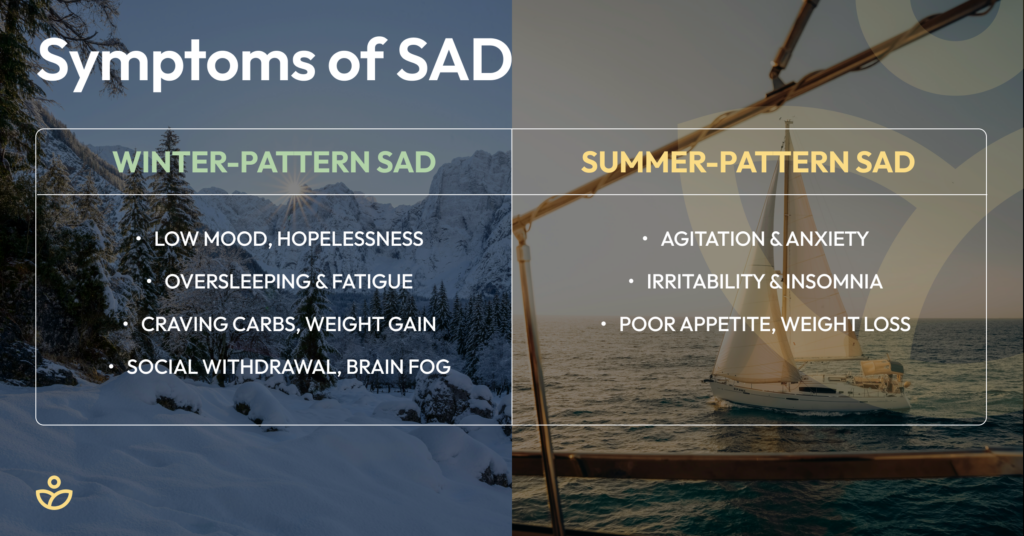
Winter-Pattern SAD (Most Common): Persistent sadness, hopelessness, loss of interest in activities, oversleeping and constant fatigue, increased appetite (especially for carbohydrates), weight gain, social withdrawal, and difficulty concentrating
Summer-Pattern SAD (Less Common): Agitation, anxiety, irritability, insomnia, decreased appetite, and potential weight loss
In severe cases of either type, feelings of worthlessness or suicidal ideation can occur. If these patterns sound familiar, it’s time to talk to a healthcare professional.
Traditional Treatment Approaches
Effective treatment for SAD often involves a combination of therapies tailored to your specific needs.
Light Therapy
Light therapy is a cornerstone of SAD treatment. It involves sitting in front of a special light box (10,000 lux) that mimics natural sunlight, helping to reset your circadian rhythm and regulate mood-affecting brain chemicals. Sessions typically last 20-30 minutes within the first hour of waking. While generally safe, consult a professional before starting.
Lifestyle Adjustments
Simple changes can make a significant difference:
- Get outside for 15-20 minutes daily, even on cloudy days
- Exercise regularly, aiming for at least 20 minutes three times a week
- Maintain a balanced diet and resist carbohydrate cravings
- Keep a consistent sleep schedule with 7-9 hours nightly
Psychotherapy and Medication
Cognitive-Behavioral Therapy adapted for SAD (CBT-SAD) helps you identify and challenge negative thoughts and behaviors linked to the seasons. Antidepressant medications like SSRIs (fluoxetine, sertraline) and bupropion can also be vital for moderate to severe symptoms. Bupropion can be taken preventatively from fall through spring to stop depressive episodes before they start.
Innovative Treatment Options for Treatment-Resistant SAD
When traditional approaches don’t provide relief, advanced treatments offer new hope. At Anew Therapy Utah, we specialize in cutting-edge, personalized therapies designed for rapid symptom relief.
Transcranial Magnetic Stimulation (TMS)
TMS is an FDA-approved, non-invasive treatment that uses magnetic pulses to stimulate specific areas of the brain associated with mood regulation. Unlike medication, TMS has no systemic side effects and doesn’t require anesthesia.
“The procedure is painless and results are immediate without the introduction of changes in medication. I was able to continue with normal activities immediately after the procedure such as driving,” says one TMS patient.
Treatment sessions typically last 20-40 minutes and are conducted five days a week for 4-6 weeks. Many patients notice improvements within the first few weeks of treatment.
Ketamine Therapy
Ketamine therapy represents a breakthrough for treatment-resistant depression, including SAD. Unlike traditional antidepressants that can take weeks to work, ketamine often provides relief within hours to days. It works by targeting different neurotransmitter pathways in the brain, particularly glutamate, which plays a crucial role in mood regulation.
Our carefully monitored ketamine infusion sessions take place in a comfortable, clinical setting. Many patients experience significant improvements in mood, energy, and motivation after just a few sessions, making it an excellent option for those facing severe seasonal depression that hasn’t responded to other treatments.
Spravato (Esketamine) Nasal Therapy
Spravato is an FDA-approved nasal spray form of ketamine specifically designed for treatment-resistant depression. It offers the rapid-acting benefits of ketamine in a convenient intranasal format, administered in our office under medical supervision and combined with an oral antidepressant.
This treatment is particularly beneficial for individuals with SAD who need fast relief from severe symptoms, especially during the darkest winter months when waiting weeks for traditional medications to take effect simply isn’t viable.
Prevention and Finding Hope
If you have a history of seasonal depression, consider starting treatments like light therapy or medication before fall begins to reduce or prevent episodes altogether. A comprehensive wellness plan combining lifestyle changes, therapy, and innovative treatments like TMS, ketamine, or Spravato can help you stay ahead of symptoms.
You are not alone in this struggle. If you or someone you know is experiencing thoughts of suicide, please reach out immediately. Call or text the 988 Suicide & Crisis Lifeline at 988. In life-threatening situations, always call 911.
Find Lasting Relief from Seasonal Depression
At Anew Therapy Utah, we’re committed to helping you navigate the challenges of SAD with cutting-edge treatments and compassionate care. Whether you’re seeking traditional therapies or exploring innovative options like TMS, ketamine therapy, or Spravato, we create personalized treatment plans that offer real hope and effective solutions.
Don’t let another winter pass you by in darkness. Schedule a free consultation or call us at (801) 980-2690 to discover how our advanced depression treatments can help you reclaim your life, no matter the season.
