

You have heard that ketamine therapy might help. Maybe your doctor mentioned it, or you found your way here after months of trying other treatments that just did not work. Now you are wondering: what does this actually look like? What will I feel? Will I be okay?
These are the questions most people ask before their first session. The fear of the unknown is one of the biggest barriers people face before their first session. So here is a straightforward walkthrough of what ketamine therapy at Anew Therapy actually involves, from your first consultation all the way through recovery.
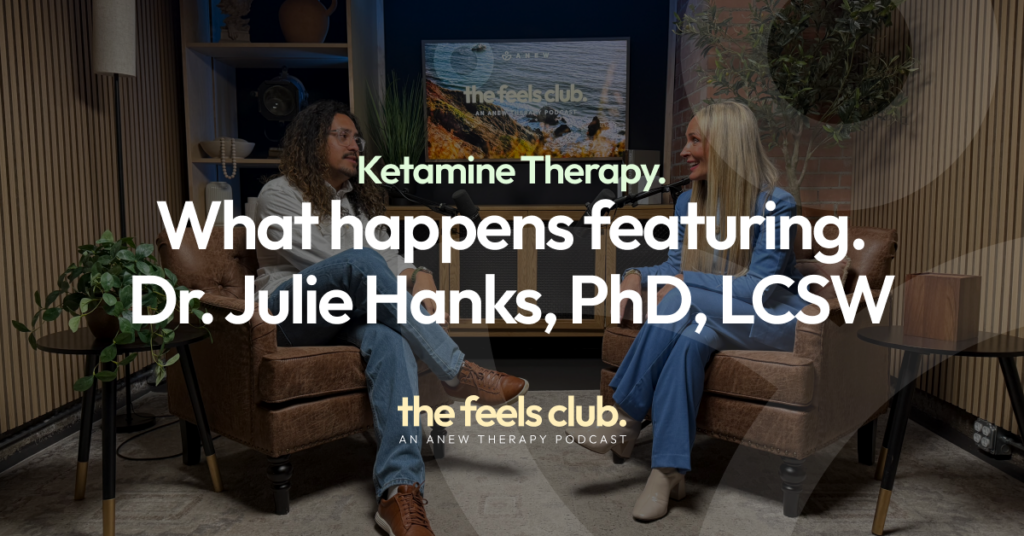
Watch the latest The Feels Club podcast where we sit down with Dr. Julie Hanks, PhD, LCSW, where walk through Ketamine Therapy a step by step guide.
Who Is Ketamine Therapy For?
Ketamine therapy usually isn’t the first thing doctors try. It is typically offered to people who have not found enough relief from traditional approaches. This includes people living with treatment-resistant depression, severe major depressive disorder, PTSD, complex trauma, anxiety disorders, and OCD that has not responded to other interventions.
Before treatment begins, every patient goes through a thorough screening process. This includes medical clearance, a review of mental health history, and an honest conversation about goals and expectations. At Anew, ketamine is usually combined with therapy and integration support. The medication opens the door, but the real work often happens between sessions.

How to Prepare in the Days Before Your Session
A little preparation can go a long way towards a successful session. Patients who arrive grounded and prepared tend to have smoother, more meaningful experiences.
In the day or two leading up to your appointment, focus on sleep, gentle movement, and reducing unnecessary stress where you can. Follow your clinic’s fasting instructions carefully, typically no food for four to six hours before your session. The morning of, wear comfortable, loose clothing. Skip heavy perfume, restrictive accessories, and nonessential supplements unless your provider has cleared them.
Bring things that help you feel settled: a soft blanket, an eye mask, or a meaningful personal object if the clinic allows it. Arrive a little early so you are not rushing. And give yourself this simple reminder before you walk in:
A helpful mindset is simple: you don’t need to force anything to happen.
What Check-In and Setup Looks Like
When you arrive, the team will walk you through a brief check-in that typically includes a review of how you are feeling that day, a quick safety screening, and any last questions before the session begins. Vitals are monitored throughout treatment to make sure everything stays within a safe range.
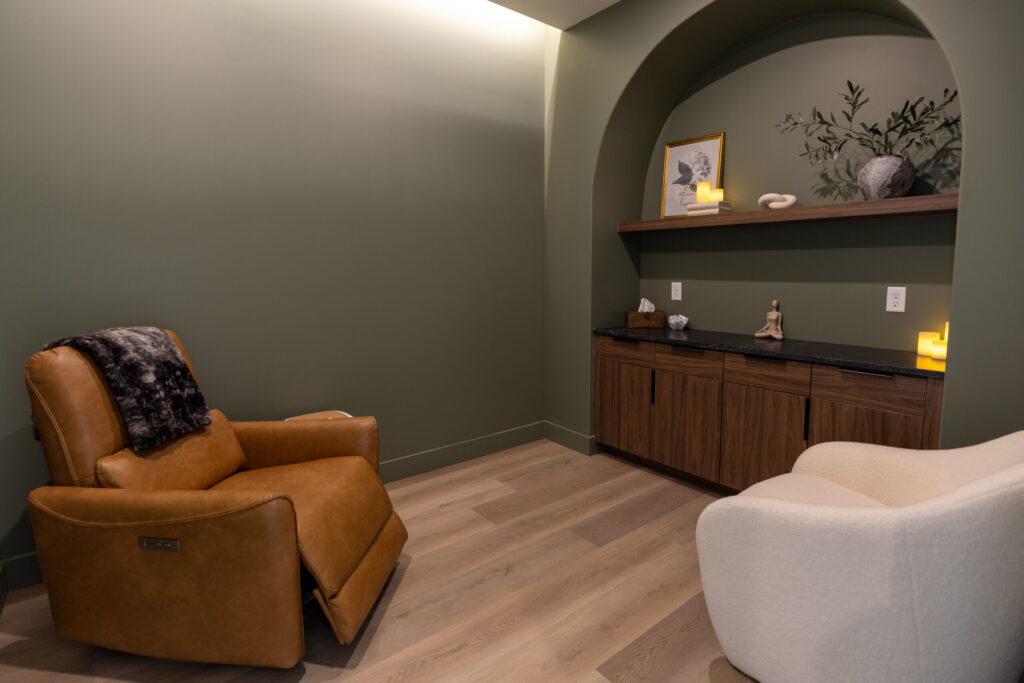
Before the medicine is administered, you will usually have the chance to set an intention for the session. You will also make a few comfort choices: lighting, music, whether to use an eye mask. Those choices can actually make a big difference. Creating a calm, personally meaningful environment has a real effect on the quality of the experience. That’s why our team will make it a priority that you feel safe and comfortable before you begin your session.
If you are anxious walking in, that’s normal. Tell the team, that’s what we’re here for. You are never expected to pretend you’re fine.
What You May Feel During the Session
People respond to ketamine in different ways, but there are some experiences that come up regularly. In the first few minutes, you might notice a mild floating sensation, a softening of tension in your body, or a gentle shift in how sounds or light seem to land. Time often feels different, slower or less fixed than usual.
As the session deepens, some people experience dreamlike imagery, a reduced sense of emotional weight around painful memories, or moments of unexpected calm. Others describe a feeling of distance from their usual mental chatter, as if the volume on rumination has been turned down. Some people cry. Some feel expansive and connected. Some feel very little and drift through a quiet, restful state.
All of these are valid. There is no right way to experience a ketamine session.
Occasionally, people have more intense experiences: a sense of leaving the body, vivid imagery, or unfamiliar feelings of dissolution. These can feel disorienting, but they are known, manageable responses. Your care team is present and trained to help you navigate anything that feels too big. If you need grounding, they will provide it. If you need to speak, you can.
What If Nothing Dramatic Happens?
Some patients finish a session and feel like not much occurred. They don’t have visions or a “breakthrough moment”, they just experience a quiet hour or two.
This is still a valid, productive session. Ketamine works in part by increasing neuroplasticity, the brain’s ability to form new connections. That process does not require a cinematic experience. Benefits often surface in the hours or days following treatment as shifts in mood, reduced anxiety, improved sleep, or a different relationship with difficult thoughts. A calm session can be exactly what a highly activated nervous system needs.
Recovery: The Rest of That Day
After the session ends, you will spend time in a recovery area before leaving. The clinic will check in with you, make sure you have eaten and had water, and give you space to gently return to yourself. If a therapist is part of your session, this is also a good time to share what came up while it is still fresh.
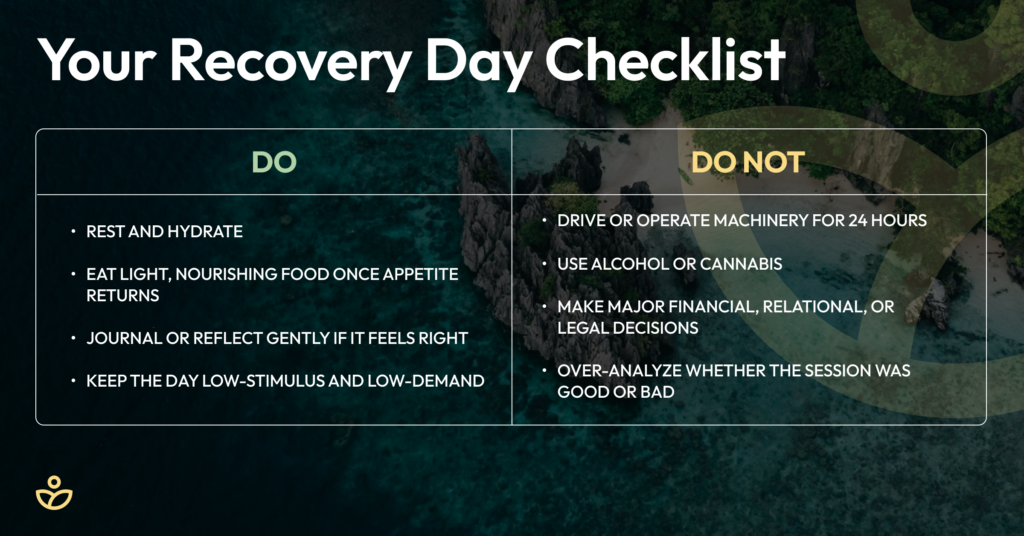
For the rest of the day, protect your nervous system. Rest. Eat something light and nourishing. Take a short walk if it feels good. Keep screens, social media, and stimulating conversations to a minimum.
There are a few firm rules: do not drive or operate machinery for at least 24 hours. Avoid alcohol and cannabis. Do not make major decisions, financial, relational, or otherwise, that day. And do not try to force meaning out of the session right away. Let it settle.
Integration: How the Work Continues
Integration is what happens between sessions, and it is where a lot of the real growth occurs. It means connecting what surfaced during treatment to your actual life: noticing shifts in how you think or feel, sitting with new perspectives, and slowly building healthier patterns while the brain is in a more flexible state.
Practical integration can look like journaling about what came up (without pressure to have answers), attending therapy, spending time in nature, or simply paying attention to what feels different. It can also mean protecting yourself from unnecessary stress and asking for support when you need it.
Partners and support people play an important role too. The most helpful thing they can do is handle the practical stuff, offer calm presence, and resist the urge to ask too many questions. Quiet support matters more than you might expect.
How to Know If It Is Working
Progress with ketamine therapy does not always announce itself loudly. Many patients notice subtle shifts before they notice dramatic ones: sleeping a little better, feeling slightly less trapped in anxious thoughts, finding it easier to be present in a conversation, or experiencing a small flicker of motivation after a long stretch of feeling flat.
These early signs matter. If you notice them, tell your care team. Progress tracking at Anew is designed to feel collaborative and human, not like a checklist. And if you feel better and then dip again between sessions, that is a normal part of the process, not a sign the treatment is failing.
Anew Therapy offers ketamine-assisted therapy in Utah as part of a comprehensive, trauma-informed approach to mental wellness. If you are curious whether this treatment might be right for you, we welcome you to schedule a consultation with our team online or by calling or texting us at (801) 980-2690.
Frequently Asked Questions
Will I be awake during the session?
Yes. Ketamine therapy at therapeutic doses does not put you to sleep. You will be aware of your surroundings and able to communicate with the team if you need to.
What if I feel nauseous?
Mild nausea is one of the most common side effects and is manageable. Let the team know right away if you feel unwell. Anti-nausea support is available and easy to administer.
What if I get emotional or cry?
That is welcome and normal. Emotional release during a session is often a sign the treatment is doing exactly what it is supposed to do. You will not be judged, and you will not be alone.
Do I need a ride home?
Yes, always. You cannot drive after a ketamine session. Arrange transportation in advance, and consider having a support person available for the rest of the day.
Can I go back to work the next day?
Most people can return to normal activity the following day. The day of treatment should be kept clear and low-demand. Listen to your body and follow your provider’s guidance.
It’s normal to feel nervous before starting something new. Just remember that you do not have to be fearless to begin. You just need the right support around you.
Ready to figure out whether ketamine therapy is right for you? Just call or text our team at (801) 980-2690 or schedule a your free consultation online.
