

You snapped at your partner over dishes. You zoned out completely in a meeting and had no idea why. Or you felt a rush of panic in a totally calm moment and found yourself wondering, “Why am I reacting like this when I know I’m safe?”
If that sounds familiar, you are not alone. And you are not overreacting.
What you might be experiencing is a nervous system that is carrying unresolved stress or trauma. At Anew Therapy, we hear versions of this story regularly. The good news is that understanding what is happening in your body is often the first step toward real relief.
Watch the latest The Feels Club podcast where we sit down with Dr. Brady where walk through what trauma actually is.
What Trauma Actually Is
Most people assume trauma means something catastrophic. But trauma is not defined by the event. It is defined by what happens inside you when the event occurs.
Trauma happens when an experience overwhelms your nervous system’s ability to cope. The brain files it not as “something that happened” but as “something still happening.” That difference matters enormously.
Therapists often distinguish between “big T” trauma, things like abuse, accidents, or violence, and “little t” trauma, things like emotional neglect, chronic criticism, or a painful loss. Little t trauma can be just as impactful, especially when it builds up over years.
Two people can go through the exact same event and respond completely differently. It doesn’t mean one is weaker than the other. Everyone has different biology, history, and the support available to them.
Just remember:
Your reaction makes sense. Your nervous system is just doing what it was designed to do.
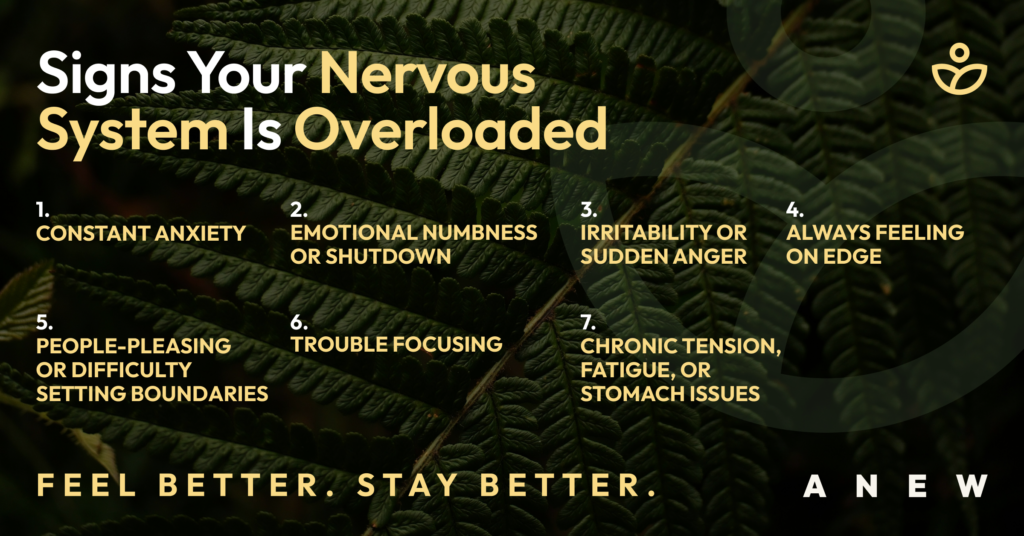
Signs Your Nervous System May Be Overloaded
Trauma does not always show up the way people expect. It often looks quieter and more confusing than that. It’s not uncommon for people to experience trauma symptoms for years without realizing their nervous system is still stuck in protection mode.
Common trauma symptoms to look out for include:
• Anxiety that feels constant or hard to explain
• Emotional shutdown, numbness, or feeling disconnected
• Irritability or anger that seems out of proportion to the situation
• Feeling on edge, like you are always waiting for something to go wrong
• People pleasing, difficulty saying no, or losing yourself to keep the peace
• Trouble concentrating or staying present
• Physical symptoms like chronic tension, fatigue, or stomach problems
These trauma symptoms are just protective patterns your nervous system developed for good reasons, even if they are no longer serving you.
What Trauma Does to the Brain
A little brain science helps make sense of why trauma symptoms feel so automatic and so hard to control.
Your amygdala is the brain’s alarm system. It scans constantly for danger, and when it detects a threat, it fires before your thinking brain even has time to weigh in. Your hippocampus normally organizes memories with a clear sense of time, but trauma can disrupt this, which is why traumatic memories can feel immediate and present rather than safely in the past.
Your prefrontal cortex, the part of your brain responsible for reasoning and perspective, gets dialed down in survival mode. This is why you can feel reactive, foggy, or stuck even in situations that are objectively safe.
When the alarm fires, your body responds with one of four automatic survival responses: fight, flight, freeze, or fawn (people pleasing).
Therapists use the idea of a window of tolerance to describe the zone where your nervous system can function well. Trauma narrows that window significantly. Healing comes when you work on widening it again.
When Trauma Looks Like Something Else
One reason trauma often goes unrecognized is that it can look exactly like other conditions.
Trauma and anxiety are deeply linked. So are trauma and depression. Burnout, chronic anger, difficulty focusing, and even physical pain can all have trauma at their root. Dissociation, that spacey, floaty, or detached feeling, is one of the most common and least recognized trauma responses of all.
Many people come to therapy believing they have anxiety, only to discover their nervous system has simply never had a chance to fully settle after years of difficult experiences. The label matters less than understanding what is actually going on underneath.
PTSD and Complex PTSD: A Quick Distinction
PTSD typically develops after a specific traumatic event or series of events and involves flashbacks, nightmares, hypervigilance, and avoidance.
Complex PTSD, or C-PTSD, tends to develop from prolonged or repeated trauma, often in childhood or in relationships where escape was not possible. It carries additional layers of shame, difficulty trusting others, and challenges regulating emotions.
Both are real, and both are treatable.
Helping the Nervous System Heal
Trauma healing starts with safety and stabilization. Before any deeper processing begins, a good therapist helps you build internal resources and learn to regulate your nervous system.
This is where trauma therapy can make a meaningful difference. Working with a trauma-informed clinician helps your nervous system slowly relearn what safety feels like.
Evidence-based trauma treatment focuses on helping the nervous system safely process difficult experiences while building stability in the present. This can include trauma-informed psychotherapy, nervous system regulation work, and for some people, ketamine-assisted therapy that helps the brain become more flexible and receptive to change.
Many people searching for trauma therapy in Utah come to Anew after years of trying to manage symptoms on their own. You do not have to figure this out alone.
At Anew Therapy in Utah, our clinicians are trained in trauma-informed care and work with each person individually to find the right fit. Reach out to schedule a consultation with our team, either by scheduling online or calling/texting our team at (801) 980-2690, and we’ll take the first step together.

Frequently Asked Questions
Can trauma come from childhood even if I don’t remember it clearly?
Yes. The nervous system stores experiences even when the conscious mind doesn’t have clear access to them. You don’t need a detailed memory for trauma to affect you, and you don’t need one to heal.
Why do small things cause such big reactions?
Your brain learned to scan for anything resembling a past threat. A tone of voice, a smell, or a certain kind of silence can trigger the alarm system before you have time to think. The reaction is about the past, not the present moment.
What is an emotional flashback?
An emotional flashback is a sudden, intense wave of emotion like fear, shame, or grief that feels disproportionate to what is happening now. Unlike typical flashbacks, there may be no visual memory attached. They are common in complex trauma and respond well to treatment.
How do I know if I need trauma therapy?
If you experience unexplained anxiety, emotional reactions that feel out of proportion, persistent numbness, or a sense that something is wrong even when life looks okay on paper, it may be worth speaking with a trauma-informed therapist. You do not have to wait for a crisis.
Understanding that your responses are rooted in nervous system trauma, not personal weakness, changes everything. The shame lifts. The confusion starts to make sense. And healing begins to feel possible.
Anew Therapy offers trauma-informed care in Utah for adults working through trauma, anxiety, depression, and related conditions. We welcome you to reach out for a consultation whenever you are ready.
If you or someone you know is in crisis, please reach out:
988 Suicide & Crisis Lifeline – Call or text 988 (24/7)
Utah Warm Line – 1-833-SPEAKUT (1-833-773-2588)
