
If you’ve been living with depression that hasn’t responded to multiple treatments, the idea of trying something new can feel equal parts hopeful and terrifying. Spravato is one of the newer options available for treatment-resistant depression, and it works in a way that’s completely different from traditional antidepressants. Because of that difference, it comes with a side effect profile that can sound alarming if you don’t know what to expect.
This article isn’t here to sugarcoat the risks or oversell the benefits. Everyone considering treatment should know what side effects are common, what’s temporary, what needs medical attention, and why the supervised treatment structure exists in the first place. If you’ve been doing your research before scheduling a consultation, this is a good place to start.
Quick Answer: What Are the Most Common Spravato Side Effects?
Most Spravato side effects are temporary and occur during or shortly after treatment. The most commonly reported ones include:
- Dissociation (feeling detached from your body, thoughts, or surroundings)
- Dizziness
- Nausea
- Sleepiness or sedation
- Vertigo
- Numbness
- Anxiety
- Low energy
- Increased blood pressure
- Vomiting
- Headache
- Feeling drunk or euphoric
- Feeling unusually happy or excited
Because Spravato can temporarily affect alertness, perception, balance, and blood pressure, it must be administered in a certified medical setting under clinical supervision, not taken at home. Patients are typically monitored for at least two hours following each session.
Why Spravato Side Effects Happen
Traditional antidepressants (SSRIs, SNRIs, and similar medications) primarily work on serotonin and norepinephrine pathways. They often take weeks to build up in your system, and they work gradually over time.
Spravato (esketamine) takes a different approach. It acts on the glutamate system, specifically on NMDA receptors in the brain. This mechanism is part of what makes it potentially useful for people who haven’t responded to standard antidepressants, and it’s also why the experience of taking Spravato feels so different from swallowing a pill each morning.
When NMDA receptors are affected, people can experience noticeable changes in perception, sensation, balance, and emotional intensity – often within minutes. This is just the medication doing what it does, and is no cause for alarm. Understanding that helps explain why many of the Spravato nasal spray side effects are immediate and sensory in nature, rather than the slow-creeping side effects that come with many daily antidepressants.
What Spravato May Feel Like During Treatment
Most people are not afraid of the nasal spray itself. They are afraid of not knowing how they will feel afterward.
That’s a completely fair concern. The experience varies from person to person, but many people describe the sensations during a Spravato session as floaty, dreamlike, detached, or disorienting. Some find it calming. Others find it strange. A few find it mildly unsettling, particularly the first time.
Dissociation tends to get the most attention because the word sounds clinical and ominous. In practice, it might feel like watching yourself from a distance, like your thoughts are foggy, or like the room feels somehow less real. It can be hard to describe and strange to experience. But in a supervised clinical setting, it’s expected, monitored, and typically short-lived.
Some people feel a sense of calm or emotional openness during treatment. Others feel nothing particularly remarkable and just feel tired. The point is that there’s a range, and your clinical team is there to help you stay comfortable throughout.

Common Spravato Side Effects by Timeline
During the Session
The most intense period for Spravato treatment side effects is usually during the session itself, while the medication is active in your system.
Dissociation is the most frequently reported effect and tends to peak around 40 minutes after dosing. Dizziness and vertigo are also common. The room may feel like it’s moving, or you may feel unsteady even while sitting. Sleepiness is typical, and some people drift in and out. Nausea can occur, though following your clinic’s preparation instructions (like avoiding food for a certain period beforehand) helps reduce this. Some people feel a sense of being drunk or euphoric and may feel unusual emotional intensity in either direction – calm and happy, or briefly anxious.
Right After Treatment
Once the session ends, you’ll remain in the clinic for monitoring (~2 hours). During this window, you may notice:
- Fatigue or grogginess – your body has been through something
- Headache – usually mild and temporary
- Mild confusion or difficulty thinking clearly
- Nausea that lingers
- Elevated blood pressure – your clinical team will check this
You won’t be discharged until the monitoring period is complete and your clinical team confirms it’s appropriate. And regardless of how you feel, you cannot drive yourself home after your Spravato session
Later That Day
Once you’re home, the more acute effects are typically fading. But you may still feel:
- Tired or emotionally low-key
- Mildly sensitive to stimulation, conversation, or stress
- Lingering mild dizziness – especially if you push yourself too quickly
- A general need to rest
Plan a quiet day after treatment. This isn’t optional advice, it’s genuinely how your body recovers best!
The Next Day
Many people feel back to their normal baseline by the following morning. Some feel better than usual. A smaller number may still feel some residual fatigue or emotional sensitivity.
Your treatment plan should be tailored to your needs, so follow your provider’s specific instructions for the day after treatment.
Spravato Dissociation: What It Means and Why It Happens
Dissociation is one of the most talked-about esketamine side effects, and it deserves a direct explanation.
At its core, dissociation means feeling disconnected from your body, your thoughts, your emotions, or the environment around you. During a Spravato session, this might look like feeling like you’re floating, observing yourself from outside, or having a sensation that what’s around you isn’t quite real. It can also show up as blunted emotional response or difficulty tracking a thought to its end.
In a certified clinical setting, your care team monitors you throughout the session specifically because of effects like this. The environment is designed to be calm and low-stimulation. You’re not left alone. If at any point the experience becomes distressing, your providers can help reorient you and adjust the setting to help you feel safer.
Knowing this ahead of time can make a meaningful difference. Dissociation feels less alarming when you understand what it is and know you’re being watched over.
Spravato and Blood Pressure
One of the serious Spravato side effects to monitor carefully is elevated blood pressure. Spravato can cause a temporary increase in blood pressure, usually peaking within the first hour of treatment and returning to baseline afterward. This is why blood pressure is checked before treatment begins. Anyone with blood pressure that’s already dangerously elevated may not be a good candidate for Spravato.
Symptoms that require immediate medical attention include:
- Chest pain or tightness
- Severe headache – different from a typical post-treatment headache
- Sudden vision changes
- Shortness of breath
- Neurological changes like weakness or numbness on one side
These symptoms are uncommon, but they are serious. If you experience any of them during or after treatment, tell your care team immediately.
Serious Spravato Side Effects: When to Call Your Provider
Most Spravato side effects are short-lived and resolve on their own. But some symptoms need medical attention, and it’s important to know what to watch for.
Contact your provider or seek medical care if you experience:
- Difficulty breathing or respiratory distress
- Chest pain
- Fainting or loss of consciousness
- Severe confusion beyond normal post-session grogginess
- Severe anxiety or panic that doesn’t settle after leaving the clinic
- Signs of an allergic reaction (hives, facial swelling, difficulty breathing)
- Worsening suicidal thoughts or behaviors – Spravato carries a warning about this risk, particularly in the early treatment phase
- Severe headache or vision changes
- Bladder symptoms: painful urination, urinary urgency, or pelvic pain – these can indicate urinary tract effects that sometimes occur with ketamine-related medications
You’re not overreacting by reporting any of these. That’s exactly what your care team is there for.
Why Spravato Requires In-Clinic Monitoring
Spravato is not a medication you take at home and go about your day. It is administered in a certified healthcare setting because the combination of effects on alertness, balance, perception, and blood pressure requires medical oversight.
The monitoring period (typically at least two hours) exists so your team can:
- Check that dissociation and dizziness are resolving appropriately
- Monitor blood pressure at intervals
- Observe for any unexpected or serious reactions
- Make sure you’re safe to be discharged
This isn’t a bureaucratic inconvenience. It’s the structure that makes Spravato a reasonable option for people with serious depression. The clinical environment is part of the safety protocol, not an obstacle to it.
Spravato Side Effects vs. Ketamine Side Effects
Both Spravato and IM ketamine are used for depression, and both involve ketamine-related compounds. Here’s how they compare:
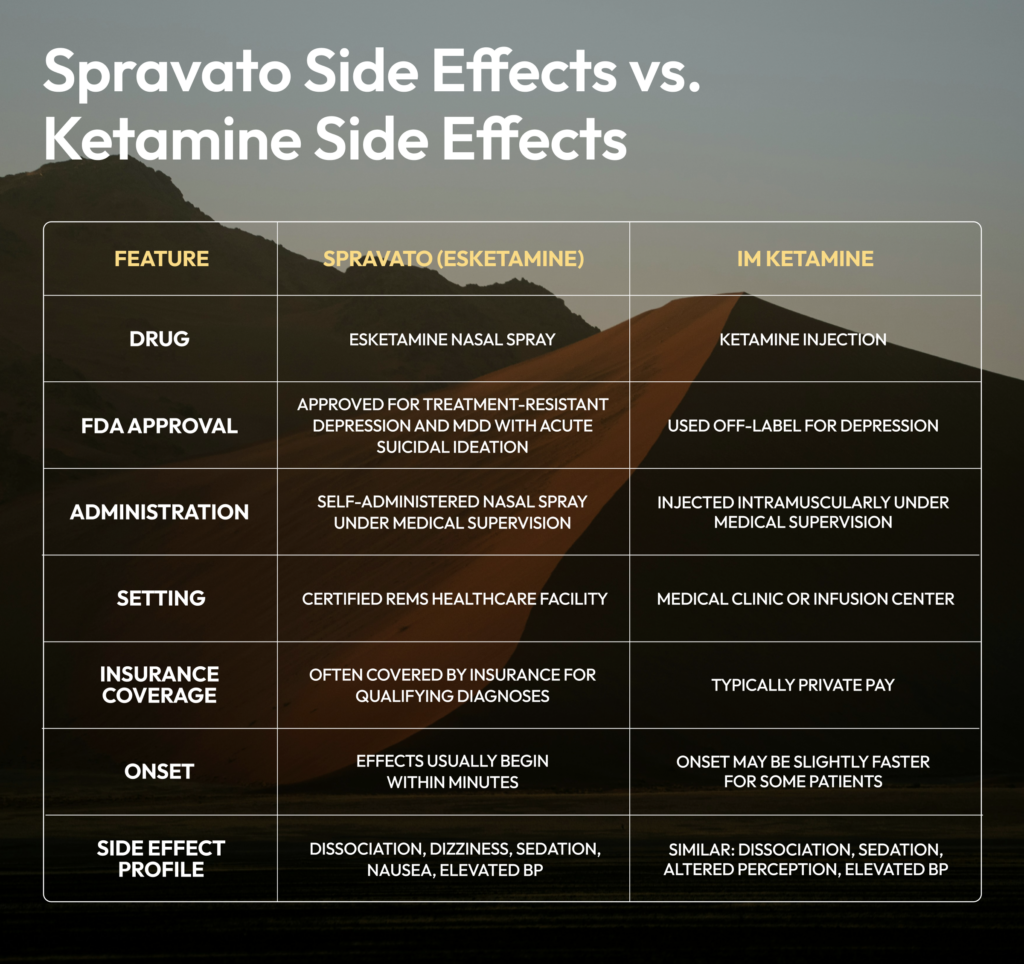
Neither option is universally better. The right choice depends on your diagnosis, treatment history, medical history, and what your provider recommends after a thorough evaluation.
Are There Long-Term Spravato Side Effects?
This is a fair and important question, and the honest answer is that long-term safety monitoring is ongoing.
What we know is that the most commonly discussed long-term concerns include:
- Cognitive effects: Some patients report memory or concentration changes, though research is still developing in this area
- Misuse or dependence risk: Spravato is a controlled substance, and the REMS program exists in part to reduce this risk
- Blood pressure: Patients with cardiovascular concerns need regular monitoring
- Urinary symptoms: Long-term use of ketamine-related compounds has been associated with bladder issues in some populations; reporting any urinary symptoms to your provider promptly is important
- Mood monitoring: Ongoing mental health follow-up remains essential
Regular check-ins with your treatment team aren’t just formalities. They’re how long-term safety gets tracked and how treatment gets adjusted if needed.
How to Make Spravato Treatment More Comfortable
A little preparation goes a long way. Here’s what tends to help:
- Follow your clinic’s food and drink instructions – typically no eating for a few hours before treatment
- Arrange a trusted ride home in advance, not as an afterthought
- Wear comfortable clothes – you’ll be sitting or reclining for a couple of hours
- Plan a low-key rest of the day – don’t schedule demanding work, social events, or errands
- Tell your provider about all medications and supplements – some can interact with Spravato
- Ask questions before your first session – knowing what’s coming reduces anxiety significantly
- Write down any side effects you notice to report at your next appointment
The more you communicate with your care team, the more they can tailor the experience to your comfort.
Ready to Learn Whether Spravato Is Right for You?
Spravato side effects can sound intimidating at first, especially if you’re already exhausted from depression, medication changes, and treatments that haven’t worked. You don’t have to sort through the risks, the benefits, and the next steps on your own.
At Anew Therapy, Spravato treatment in Utah is provided in a calm, supervised clinical setting where your comfort and safety come first. Our team will walk you through what to expect, monitor you during each session, and help you determine whether Spravato, IM ketamine therapy, TMS, medication management, or another treatment path is the best fit for where you are right now.
We also have a team that will help you with your insurance coverage, as Spravato treatment is often covered under Select Health, Medicare, UnitedHealthcare, BlueCross BlueShield, University of Utah Health Plans, Cigna, Aetna, DMBA, EMI Health, and TRICARE. For those that don’t qualify for coverage, we also work with CareCredit to make sure that treatment can be affordable for those who need it.
If you’re struggling with treatment-resistant depression and wondering whether Spravato could help, you don’t have to figure it out alone.
Schedule a free consultation today or call Anew Therapy’s team to learn more about Spravato treatment in Utah and find out whether you may be a candidate.