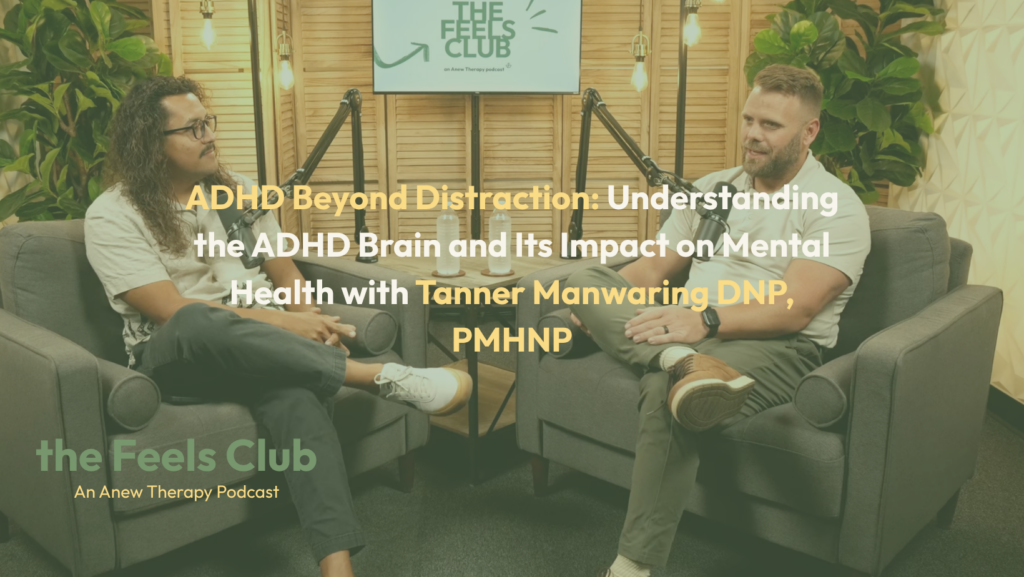
The Feels Club: An Anew Therapy Podcast
When most people hear the term ADHD, they picture someone who can’t sit still, loses their keys, or struggles to pay attention in class. While those experiences can certainly be part of ADHD, they only scratch the surface.
Attention-Deficit/Hyperactivity Disorder (ADHD) is one of the most discussed mental health conditions today—and one of the most misunderstood. Too often, it’s dismissed as laziness, lack of discipline, or simply being “bad at focusing.” In reality, ADHD is a neurodevelopmental condition that affects how the brain regulates attention, motivation, emotions, and executive functioning.
In this episode of The Feels Club, host Mauricio Laguan sits down with Tanner Manwaring, DNP, PMHNP-BC, Psychiatric Provider at Anew Therapy, to explore what ADHD really looks like, why it’s frequently missed especially in women and high-achieving adults and how effective treatment can help people thrive.
ADHD Is More Than an Attention Problem
Despite its name, ADHD isn’t simply about having a short attention span.
People with ADHD often have difficulty regulating attention, rather than an inability to pay attention altogether. In fact, many people with ADHD experience hyperfocus periods of intense concentration on activities that are stimulating or rewarding while struggling to begin or complete less engaging tasks.
ADHD affects the brain’s executive functioning system, which is responsible for managing everyday cognitive tasks like:
- Planning and organizing
- Prioritizing responsibilities
- Managing time
- Starting and finishing projects
- Maintaining focus
- Regulating emotions
- Controlling impulses
- Remembering important information
These challenges aren’t signs of low intelligence or poor character. They’re the result of differences in how the ADHD brain processes information and regulates motivation.
Executive Dysfunction: The Invisible Challenge
One of the most frustrating aspects of ADHD is executive dysfunction.
Many people describe knowing exactly what they need to do but feeling unable to make themselves start.
This isn’t procrastination in the traditional sense. Instead, it’s often a disconnect between intention and action.
Executive dysfunction can show up as:
- Missing deadlines despite working hard
- Forgetting appointments
- Feeling overwhelmed by simple tasks
- Difficulty switching between activities
- Constantly losing track of time
- Starting multiple projects without finishing them
For many adults, these struggles lead to years of self-criticism and shame before they ever realize ADHD may be the underlying cause.
ADHD and Emotional Regulation
One of the least discussed symptoms of ADHD is emotional regulation.
Many individuals with ADHD experience emotions more intensely than others and may find it difficult to “turn down the volume” after becoming upset, frustrated, or overwhelmed.
This may include:
- Feeling emotionally reactive
- Becoming easily frustrated
- Difficulty calming down after conflict
- Sensitivity to criticism
- Mood shifts triggered by stress
- Feeling overwhelmed by everyday responsibilities
Because emotional symptoms aren’t included in the traditional diagnostic criteria, many people never connect these experiences with ADHD.
Understanding this connection can be life-changing.
Why So Many Adults Are Diagnosed Later in Life
For decades, ADHD was largely viewed as a childhood condition affecting hyperactive boys.
We now know that’s an incomplete picture.
Many adults particularly women aren’t diagnosed until their 20s, 30s, 40s, or even later.
Why?
Many people develop coping strategies that mask their symptoms.
High-achieving students may compensate by working twice as hard.
Professionals may rely on deadlines and adrenaline to stay productive.
Parents may push themselves through constant overwhelm without realizing they’re expending far more mental energy than those around them.
Women, in particular, often present with more inattentive symptoms rather than overt hyperactivity, making ADHD easier to overlook.
Receiving a diagnosis later in life can bring a mix of emotions: relief, validation, grief, and hope.
Many people finally understand that the challenges they’ve experienced weren’t personal failures—they were symptoms of an undiagnosed condition.
ADHD Often Overlaps with Anxiety and Depression
ADHD rarely exists in isolation.
Many people also experience:
- Anxiety
- Depression
- Burnout
- Sleep difficulties
- Low self-esteem
Sometimes anxiety develops because someone is constantly worried they’ll forget something important.
Depression may emerge after years of feeling like they’re falling short despite their best efforts.
Burnout can occur from spending enormous amounts of energy compensating for executive functioning challenges.
Because these conditions overlap, a thorough mental health evaluation is essential to identify what’s truly driving someone’s symptoms.
ADHD Is About Motivation, Not Willpower
One of the biggest misconceptions about ADHD is that people simply “need more discipline.”
In reality, ADHD affects how the brain processes reward, interest, and motivation.
Many people with ADHD aren’t motivated by importance alone.
Instead, their brains respond more strongly to factors like:
- Interest
- Novelty
- Urgency
- Immediate rewards
That’s why someone may struggle to begin a work assignment but spend hours completely absorbed in a hobby they enjoy.
Understanding this difference helps replace judgment with compassion.

What Effective ADHD Treatment Can Look Like
There’s no one-size-fits-all approach to ADHD.
Effective treatment often combines multiple strategies depending on the individual’s needs.
Treatment may include:
Medication
For many individuals, medication can improve attention, impulse control, and executive functioning by helping regulate brain chemistry. Medication decisions are highly individualized and should always be made in collaboration with a qualified healthcare provider.
Therapy
Therapy can help individuals:
- Build healthier routines
- Develop practical organizational strategies
- Improve emotional regulation
- Reduce shame and self-criticism
- Address anxiety or depression that may accompany ADHD
Lifestyle Supports
Healthy habits can also make a meaningful difference, including:
- Consistent sleep
- Regular physical activity
- Balanced nutrition
- Structured routines
- External reminders and organizational systems
- Mindfulness and stress-management practices
The goal isn’t perfection it’s creating systems that work with the ADHD brain rather than against it.
Replacing Stigma with Understanding
Perhaps the most important message about ADHD is this:
ADHD is not a character flaw.
It isn’t laziness.
It isn’t a lack of intelligence.
It isn’t an excuse.
It’s a legitimate neurodevelopmental condition that affects millions of people across every age group, profession, and background.
With accurate diagnosis, evidence-based treatment, and compassionate support, people with ADHD can build fulfilling careers, healthy relationships, and meaningful lives.
Understanding how the ADHD brain works is often the first step toward creating lasting change.
Final Thoughts
Whether you’ve recently been diagnosed, have wondered if ADHD may explain some of your experiences, or want to better understand someone you love, knowledge can be incredibly empowering.
The more we replace myths with science and stigma with compassion, the easier it becomes for people to seek the support they deserve.
In this episode of The Feels Club, Mauricio Laguan and Tanner Manwaring discuss what ADHD really is, how it affects daily life beyond attention, why so many adults are diagnosed later in life, and what evidence-based treatment can look like.
If ADHD is affecting your work, relationships, emotional well-being, or daily life, you don’t have to navigate it alone. At Anew Therapy, our team of experienced psychiatric providers and therapists offers comprehensive ADHD evaluations, personalized treatment plans, medication management when appropriate, and evidence-based therapy to help you better understand your brain and develop practical strategies for long-term success. Whether you’re seeking answers for the first time or looking to improve your current treatment, we’re here to provide compassionate, science-backed care tailored to your unique needs.
Because understanding your brain isn’t just about finding a diagnosis it’s about finding the right support. And with the right care, it’s possible to move beyond simply managing ADHD and begin building a life that feels more balanced, fulfilling, and aligned with your goals. Contact Anew Therapy at (801) 980-2690.