Pride Month is often associated with celebration, visibility, and community. It’s a time when many people gather to honor the history, resilience, and achievements of LGBTQIA+ communities. But while Pride can be joyful and empowering, it can also bring up difficult emotions. For many LGBTQIA+ individuals, daily life includes navigating stressors that others may never have to consider—from discrimination and family rejection to concerns about personal safety, healthcare experiences, and simply feeling comfortable being authentic in public.
These experiences can have a profound impact on mental health, not because of a person’s identity, but because of the environments they must navigate.
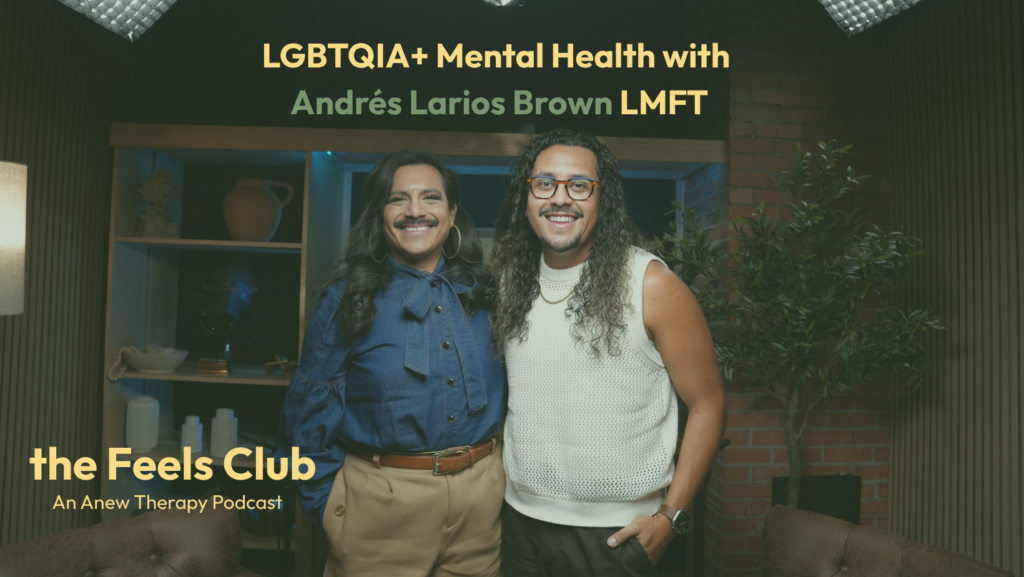
In a recent episode of The Feels Club: An Anew Therapy Podcast, host Mauricio Laguan welcomed Andrés Larios Brown, LMFT, to discuss LGBTQIA+ mental health through a compassionate, strengths-based lens. Rather than focusing solely on statistics or diagnoses, the conversation explored the realities of chronic stress, the importance of affirming care, and the resilience that develops through authenticity, connection, and community.
The discussion serves as an important reminder that healing is possible and that everyone deserves access to mental healthcare where they feel respected, understood, and safe.
LGBTQIA+ Mental Health Is Shaped by Environment, Not Identity
One of the most important messages from the episode is that being LGBTQIA+ is not a mental illness, nor does it inherently increase someone’s likelihood of experiencing anxiety, depression, or other mental health conditions.
Instead, research consistently shows that many mental health disparities within LGBTQIA+ communities are connected to environmental and social factors. Experiences such as discrimination, rejection, bullying, harassment, housing insecurity, unequal access to healthcare, or fear of being judged create chronic stress that can affect emotional wellbeing over time.
Andrés explained that many LGBTQIA+ individuals spend years evaluating whether a situation feels emotionally or physically safe. Questions like:
- Is it safe to be open about who I am here?
- Will this healthcare provider respect my identity?
- How will my coworkers respond?
- Will my family accept me?
- Is it safe to hold my partner’s hand in public?
These constant mental calculations require emotional energy. While each individual situation may seem small, they accumulate over months and years, placing significant strain on the nervous system.
The issue isn’t identity it’s the stress of living in environments where acceptance cannot always be assumed.
Understanding Minority Stress
A key topic discussed during the podcast was minority stress, a framework that helps explain why LGBTQIA+ individuals may experience higher rates of anxiety, depression, trauma, and substance use.
Minority stress refers to the chronic stress experienced by people from marginalized groups due to prejudice, discrimination, stigma, and social exclusion. Unlike everyday stressors that most people encounter, minority stress often becomes a persistent part of daily life.
Over time, the brain begins adapting to this ongoing uncertainty.
Instead of regularly shifting into a relaxed state, the nervous system may remain on high alert, constantly scanning for potential rejection or danger. This prolonged activation of the body’s stress response can contribute to:
- Anxiety
- Depression
- Burnout
- Hypervigilance
- Difficulty trusting others
- Emotional exhaustion
- Feelings of shame
- Social isolation
- Substance use as a coping strategy
Living in survival mode for extended periods affects both emotional and physical health. Sleep may become disrupted, concentration may suffer, and everyday tasks can begin to feel overwhelming.
Recognizing minority stress helps shift the conversation away from blaming individuals and instead acknowledges the broader social factors that influence mental health.
What Does Chronic Stress Actually Look Like?
One of the most insightful parts of the conversation focused on how chronic stress often goes unnoticed by others.
Many people assume someone who appears successful, outgoing, or accomplished must also be doing well emotionally. However, Andrés explained that many LGBTQIA+ individuals become highly skilled at masking their distress.
Masking can involve hiding parts of one’s identity, carefully monitoring speech or behavior, avoiding certain conversations, or changing how someone presents themselves in order to reduce the risk of judgment or rejection.
These adaptations often begin at a young age.
Someone who grows up learning that being authentic might lead to rejection may become extremely aware of how they speak, dress, laugh, or interact with others. Over time, constantly monitoring oneself can become emotionally exhausting.
Because masking becomes second nature, many people don’t realize how much energy it requires until they find spaces where they can finally relax and be themselves.
This emotional labor often remains invisible to others.
The Lasting Effects of Internalized Shame
The podcast also explored how repeated negative messages about LGBTQIA+ identities can contribute to internalized shame.
When someone repeatedly hears that who they are is “wrong,” “too much,” or somehow unacceptable, those messages can become deeply rooted over time even if they intellectually know those beliefs aren’t true.
Internalized shame may show up in many different ways, including:
- Difficulty accepting compliments
- Feeling undeserving of love or happiness
- Constant self-criticism
- Fear of vulnerability
- Challenges forming healthy relationships
- Difficulty setting boundaries
- Perfectionism
- Anxiety around being fully authentic
These experiences are not signs of personal weakness. Rather, they are understandable responses to years of external messages that questioned someone’s worth or belonging.
The good news is that these patterns can change.
With compassionate support, many people learn to recognize those internalized beliefs, challenge them, and replace them with healthier, more affirming ways of seeing themselves.

Healing Begins with Safety
A recurring theme throughout the episode was that healing cannot happen without safety.
Safety means more than physical protection. It also includes emotional safety the ability to express thoughts, feelings, and identity without fear of judgment or rejection.
For many LGBTQIA+ individuals, experiencing true emotional safety may be unfamiliar.
That is why affirming mental healthcare can be so transformative.
An affirming therapist creates an environment where clients do not need to educate their provider about LGBTQIA+ experiences or defend their identity. Instead, therapy becomes a place where energy can shift away from self-protection and toward healing, growth, and self-discovery.
Feeling genuinely seen and accepted allows people to process difficult experiences with greater openness and trust.
What Does Affirming Mental Healthcare Look Like?
During the conversation, Andrés emphasized that affirming care extends beyond simply being welcoming.
Affirming providers recognize the unique stressors LGBTQIA+ individuals may experience and understand how those experiences affect mental health. They approach therapy with curiosity, respect, and cultural humility rather than assumptions.
Affirming mental healthcare often includes:
- Respecting a person’s identity and lived experiences
- Using names and pronouns that align with the individual
- Understanding minority stress and its impact on mental health
- Creating an environment where authenticity is encouraged
- Recognizing both challenges and strengths
- Supporting clients in building resilience and self-acceptance
Perhaps most importantly, affirming therapy focuses on treating the person—not reducing them to one aspect of their identity.
Everyone deserves healthcare where they feel heard, respected, and valued.
The Power of Community and Chosen Family
Another powerful message from the episode was the importance of connection.
Community can play an essential role in protecting mental health.
For many LGBTQIA+ individuals, chosen family are people who provide love, support, and acceptance regardless of biological relationships becomes an invaluable source of stability.
Supportive relationships help reduce isolation while reinforcing an important truth: everyone deserves to belong.
Whether that support comes from friends, partners, support groups, mentors, family members, or affirming healthcare providers, meaningful relationships create opportunities for healing.
Community reminds people they are not alone in their experiences.
It also provides space to celebrate joy, resilience, identity, and hope not just survive adversity.
Small Steps Can Make a Big Difference
Healing rarely happens overnight.
Instead, it often develops through many small, consistent steps.
Throughout the episode, Andrés encouraged listeners to focus on practical actions that help build resilience over time, including:
- Finding affirming healthcare providers
- Connecting with supportive communities
- Setting healthy boundaries with people who are not supportive
- Practicing self-compassion
- Challenging internalized shame
- Asking for help when needed
- Prioritizing emotional and physical wellbeing
Each step helps reinforce safety, confidence, and self-worth.
Even when progress feels slow, meaningful healing is still happening.
You Don’t Have to Navigate This Alone
One of the most hopeful messages from this conversation is that support exists.
Depression, anxiety, trauma, and chronic stress can make it feel like you’re carrying everything by yourself, but healing becomes much more possible when you have compassionate people walking alongside you.
At Anew Therapy, we believe everyone deserves evidence-based, affirming mental healthcare that honors their unique experiences. Our team provides compassionate support for individuals experiencing depression, anxiety, trauma, grief, and other mental health concerns while creating a space where people can feel respected, understood, and empowered in their healing journey.
Whether you’re seeking therapy for the first time or continuing your mental health journey, reaching out for support is a meaningful step toward building hope, resilience, and lasting wellbeing.
If you or someone you love is experiencing thoughts of suicide or a mental health crisis, call or text 988 to reach the Suicide & Crisis Lifeline. If you’re in Utah and looking for non-crisis peer support, you can also contact the Utah Warm Line at 1-833-SPEAKOUT (1-833-773-2588).
You do not have to figure this out alone. While chronic stress and difficult experiences can make healing feel out of reach, recovery is possible. With compassionate care, supportive relationships, and affirming resources, it’s possible to move forward with greater confidence, connection, and hope one step at a time. Call Anew Therapy at 801-980-2690 to move forward with continued healing.